
Location, Location, Location
three filmmakers on location scouting and shooting


When I think of my all-time favorite films, one common thread is the use of atmospheric, picturesque, compelling locations. The midcentury San Francisco of Vertigo (1958), the fluorescent and glass Taipei of Yi Yi (2000).
I’ve recent finished a lengthy retrospective of Robert Altman’s films; his filmography abounds in memorable locations, from the Desert Hot Springs health spa in 3 Women (1977) to the Hollywood backlot in The Player (1992), the hazy, sunbaked Los Angeles County suburbs in Short Cuts (1993) and the stately manor grounds in Gosford Park (2001).
Locations are of course a logistical challenge as a well as a key artistic element. For this month’s conversation with filmmakers, I invited three contemporary directors to discuss both sides of the location shooting process. Jared Sprouse and Sis Gürdal (Drama Quinoa) are right here on Substack, while H. Nelson Tracey can be found on his website and on Instagram.
What is your general approach to filming locations?
I’m deeply inspired by locations. They often become the starting point for a story. My first narrative short film came from visiting a friend’s house on the coast of Turkey. It was built around a central courtyard, which is common in traditional Turkish architecture, and it made me think about how little privacy exists in a family home where every room opens onto a shared communal space. That observation became the emotional foundation of the film, which followed a teenage girl feeling pressure from the women in her family, only to then impose that same pressure on her more liberal cousin visiting from abroad.
I think of locations as part of the emotional fabric of a story. They make the world feel tangible to me. They hold mood, tension, atmosphere. Often, they reveal something essential before a character even speaks.
Sis Gürdal
You can never quite find the perfect location. Ultimately whatever the writer has written likely doesn’t exist one-to-one unless they wrote specifically for a particular place. Now I’ve never shot in a major city hub, so thankfully in more suburban/rural areas, location owners are usually more agreeable as long as you don’t inconvenience them too badly. One or two days is usually easy enough to find an agreeable owner to shoot somewhere.
But a mostly one-location shoot means you have to find a location that isn’t actively being used. That’s much tougher depending on what’s written. We also look to combine locations as much as possible if it’s a small room, the less I have to move a film crew across town the better, that means more time to actually shoot the project.
Once I have a location that I’m seriously interested in I’ll bring my production designer and cinematographer along to do a walk through to see if they see something I’m overlooking. We may need to adjust the shotlist for the new layout, or perhaps the wall color isn’t working. We try and find a compromise as to which place ticks the most boxes at the end. Additionally I’m always careful about sound, is there an airport nearby? A busy road? Or a fire station? These issues could be a death knell to a small production.
Jared Sprouse
I figured out early on in my writing and in making short films, that one of my signatures was location-centric storytelling. On a short film level, all my early projects were driven by setting, most notably a bowling alley and a sex shop where I shot my first two short films. From these locations, characters and scenarios spawned: who occupies these spaces?
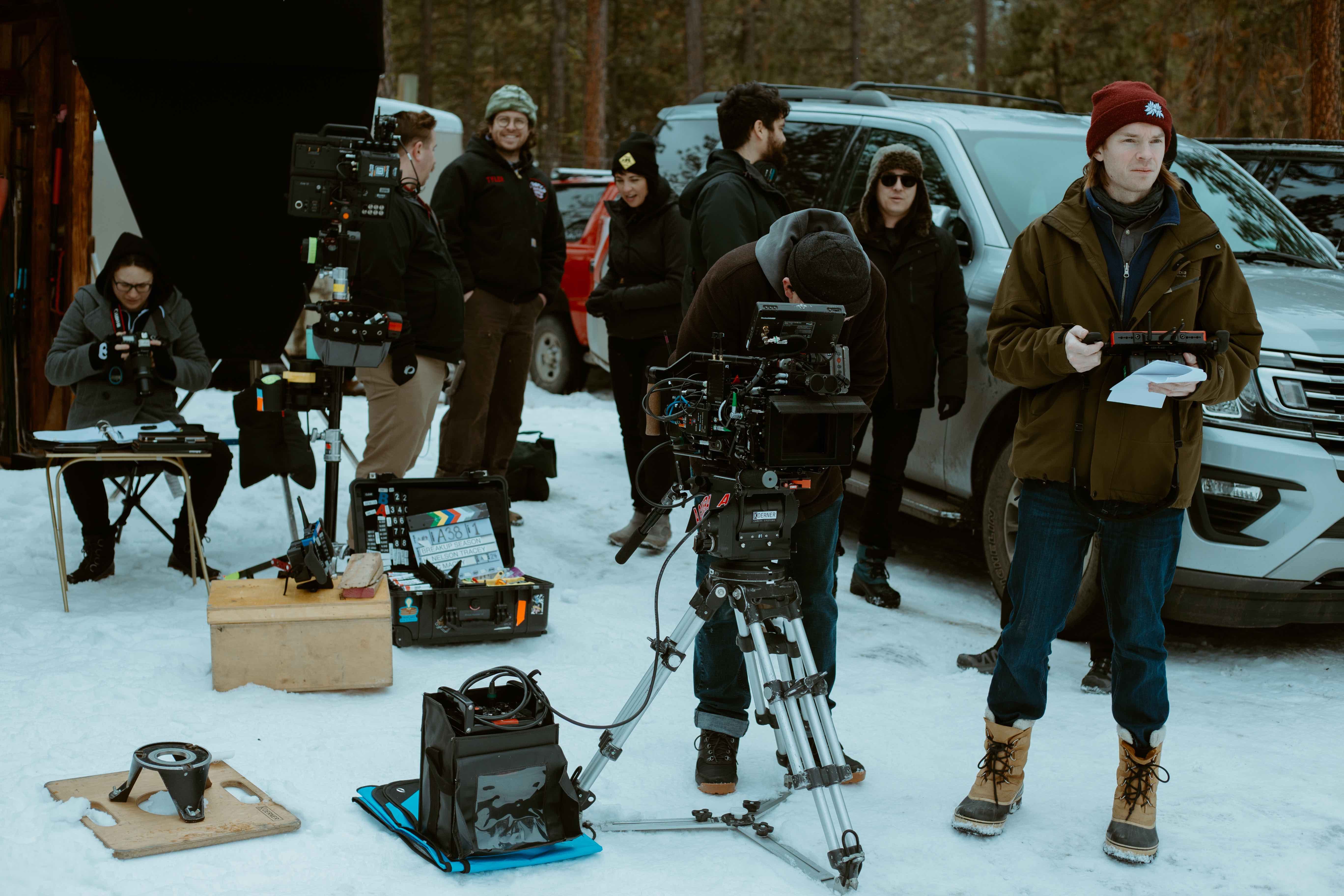
Leaping to my debut feature, this was equally the case. From its inception, my feature Breakup Season was rooted in La Grande, Oregon, a location whose granular details informed plot points and character traits. I spent ample time there informing the story further based on speaking to locals and making sure it rang true. I think my documentary work is also informed by this love of geography and locations, as documentaries more naturally emphasize this. And my first music video is all set aboard an airplane, which ties into the story every step of the way.
H. Nelson Tracey
What do you look for in a location?
I think of location almost as a character, it can shape the way I shoot just as much as the people in the frame. I’m drawn to spaces that have a real presence to them. Colour and light are obvious considerations, but beyond that, it’s about whether the actors feel naturally embedded in the environment, rather than simply placed into it.
A lot of this is instinctive rather than entirely practical, which is interesting to reflect on, because I don’t often consciously break down what I’m responding to. You only really begin to articulate it when working closely with a location scout, and you realize it’s not just about aesthetics, it’s about atmosphere, authenticity, and whether the space can quietly carry part of the story.
Sis Gürdal
I have a list of artistic non-negotiables for each location in a script. This can change depending on the project’s requirements. But the blocking has to work for the space above all. If it’s an exterior we are paying close attention to the sun to figure out what is the optimal way to shoot in this space. I’m also trying to keep potential safety concerns in mind. If there’s violent or sexual content, are we secluded from the public?
I’m also trying to maximize production value for whatever small amount of budget we have. A blank canvas can be a death knell because you have to fill it. I’d love to work with a larger production design team in the future but on most of my projects, the department is small. Therefore, we really have to find a location that is 80% of the way there and fluff it up a bit.
Jared Sprouse
First, has it been spoken for? I’m less interested in making movies in places like New York or Los Angeles that have had dozens of excellent films showcase them cinematically. I’m far more intrigued to create movies about places that may have never been onscreen or seldom are represented that way. La Grande Oregon, where Breakup Season was shot, had only ever been in two movies: 1969’s Paint Your Wagon, and a very obscure indie from 1999. That provides me more creative space to take audiences somewhere new.
H. Nelson Tracey
What is your favorite location that you've used in a film? And how did that inform the final film?
It would actually be the house I mentioned in the first question, because it wasn’t simply a backdrop, it was the origin of the story itself. The architecture sparked the emotional premise, so the location didn’t just inform the final film; it shaped its themes, tensions, and visual language from the outset.
Sis Gürdal
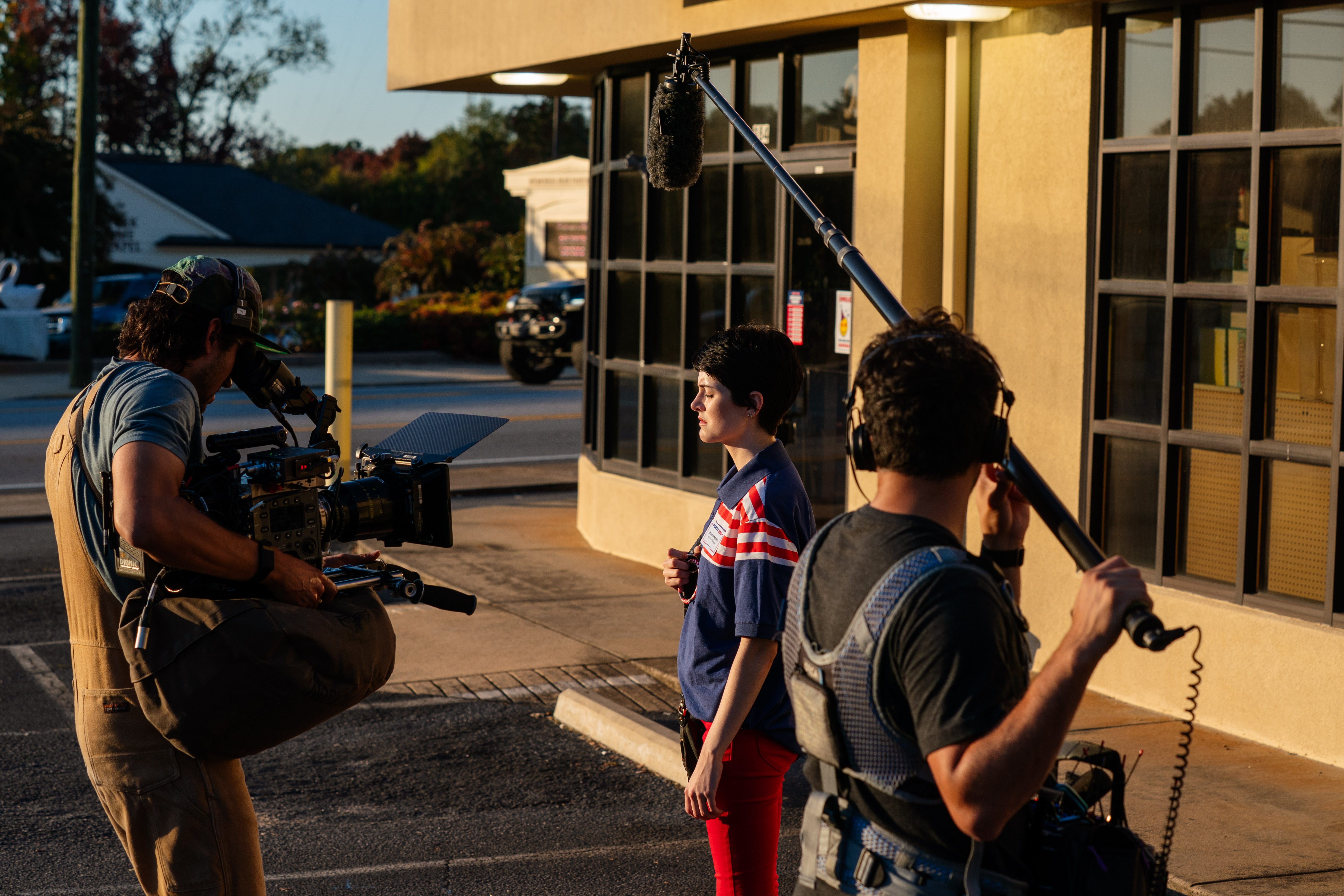
Probably the party store location from my last project. We needed several things from it; a store large enough to realistically employ 4-5 people during the peak season, a back office that resembled hell on earth, a supply closet, and a dingy bathroom (ideally with stalls). Oh and if the store could have the shelves somewhat stocked and also not actually be open that would be perfect. We simply couldn’t afford to close a business for several weeks. I went online and found a location listed that was admittedly a little far for our crew but fit nearly everything we could ask for.
We found an off season fireworks store stocked to the brim with inventory. This meant we saved a lot of money for the art department and they had a lot less work to do. We stacked fireworks in the back to create a nonexistent back office. Meanwhile we used the boxes to create a fake utility closet as well. Unfortunately it did not have stalls so I had to re-write a scene to be outside of the store hidden behind some trailers. Plus we had a location owner who was more than willing to help us. There are thousands of stories of people burning locations because the owners don’t know what they’re getting themselves into. This helped tremendously as we later needed some inserts and reshoots.
Jared Sprouse
I’d have to talk further about La Grande, since it’s such a central part of my biggest project to date. It’s a rural mountain town 4 hours from Portland, 3 hours from Boise, way out there. It’s inside the largest fully enclosed valley in the Lower 48 - 360 degrees of mountains. When I first visited in 2019, I likened it to a model train village; it’s got a train depot right next to downtown so feels lost in time in the best way. Stunning in the autumn, but also great in the winter, which is when we filmed in it. The truth is, I had been developing a different film for the region but then I would mention the logline for Breakup Season to locals -- a young recently broken up couple stuck together for Christmas due to a blizzard -- and everyone would say, “that happens every winter here.” Because the town is surrounded by mountains in all directions, it’s an annual occurence for there to be a snowstorm that shuts down the interstate. Boom. Now I had to make this movie here, it was tailor made for this location.
When we finally screened Breakup Season for the local audience, we packed the town’s biggest auditorium and sold out the show. During the snowstorm scene, the audience erupted with contagious laughter; it was like we were telling an old inside joke they all knew really well. This happened in other sequences as well: there’s a throwaway line where a non-local mispronounces the town name (non-locals frequently call it “La Grange”), and everyone in the screening laughed. This was music to my ears and showed that I had done my homework and captured these granular details that made the location unique. It was one of the proudest nights of my life.
H. Nelson Tracey
What is the strangest incident or encounter you’ve had while shooting on location?
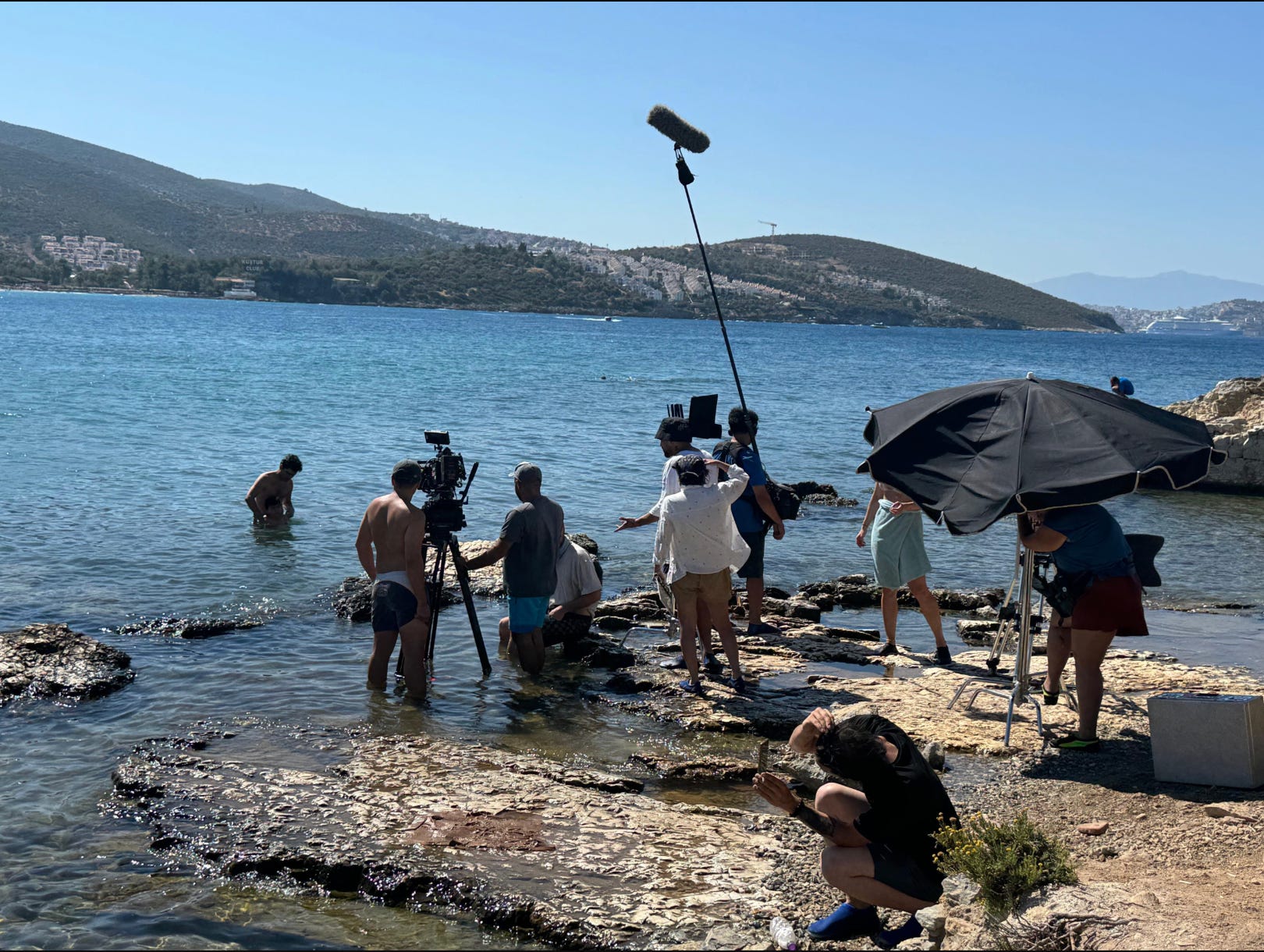
I shot a short film this summer that involved a swimming scene in the sea. While scouting, I went into the water to check how shallow it was and whether it would be safe for filming. Unbeknownst to me, the area was home to an extremely poisonous type of seaweed. It only brushed against my legs momentarily, but within a short time I developed a severe rash that spread all the way up to my waist. I had to be rushed to hospital for a cortisone injection. Needless to say, we found a new location the next day.
Sis Gürdal
We partially shot a project in a funeral home. I was really interested in shooting in the room where bodies were temporarily stored, but it was occupied. But the funeral director was really nice and moved the body so we could look and later shoot in that space. I can’t remember if I mentioned to the extra played the dead person that a body was just there recently.
Another tidbit, we did have multiple people come into the Party store to buy things. That was pretty hilarious.
Jared Sprouse
I can’t say I’ve had anything truly strange happen in the paranormal or eerie sense, but I can recall shooting my first properly budgeted short film “Spare the Kid” at a bowling alley, and we had to do it in off-peak overnight hours. However, the bowling alley was open 24 hours, meaning for the majority of the evening, we had to deal with people bowling just down the way from us. They were loud, so we’d beg them to take cigarette breaks outside so we could shoot key dialogue scenes, and finally, they went home around 5am and we could crank through the rest of our shoot.
H. Nelson Tracey
What film’s use of locations really stands out to you?
I watched Columbus not long ago, and it really stayed with me. It’s not so much the locations themselves, but the way they’re observed. The cinematography frames the world (and particularly its architecture) through an analytical, almost reverential gaze, while the story explores the emotional and healing potential of those spaces through Casey, who sees the town’s modernist buildings not as tourist landmarks, but as places of refuge and inspiration. It’s a beautiful, incredibly precise marriage of visual language, location, and story.
Sis Gürdal
In contemporary cinema, The Last Stop in Yuma County (2023) has a perfect location. Small town diner in the desert with nothing for miles. However, the nooks and crannies they find to elevate the story, as well as the blocking layout in the hero location, are all expertly done.
In classic cinema, The Young Girls of Rochefort (1967) is a perfect example. The town center square is perhaps one of the most jaw dropping use of space in all of film. The whole story hinges on the idea that love could be around this very corner, and Demy expertly glides the camera from one part of Rochefort’s town square to another. I imagine he wrote it specifically with many of the locations in mind. You can’t imagine it set anywhere else.
Jared Sprouse
I’m a big fan of Kelly Reichart’s work and that partially inspired my interest in shooting in Oregon: First Cow (2019), Old Joy (2008), and even her more subtle contemporary locations in Showing Up (2022) all make great use of their Oregon setting. Train Dreams (2025) is one of those recent “how did they do it?” examples, largely shot in Washington. Sean Baker’s work is a textbook perfect example of this, with The Florida Project (2017) being a masterclass in taking us to places we otherwise wouldn’t see on a big screen and characters feeling informed by setting.
I made an entire video essay about how the movie Widows (2018) utilizes Chicago. But the movie that inspired me the most is Todd Field’s In the Bedroom (2001). It’s richly detailed with how Camden, Maine informs the story. This is my high watermark in location-centric storytelling, and one of my all time favorites on all accounts.
H. Nelson Tracey
 | A guest post by
|
 | A guest post by
|
Great behind the scenes info.