
Altmanesque 20
Epilogue

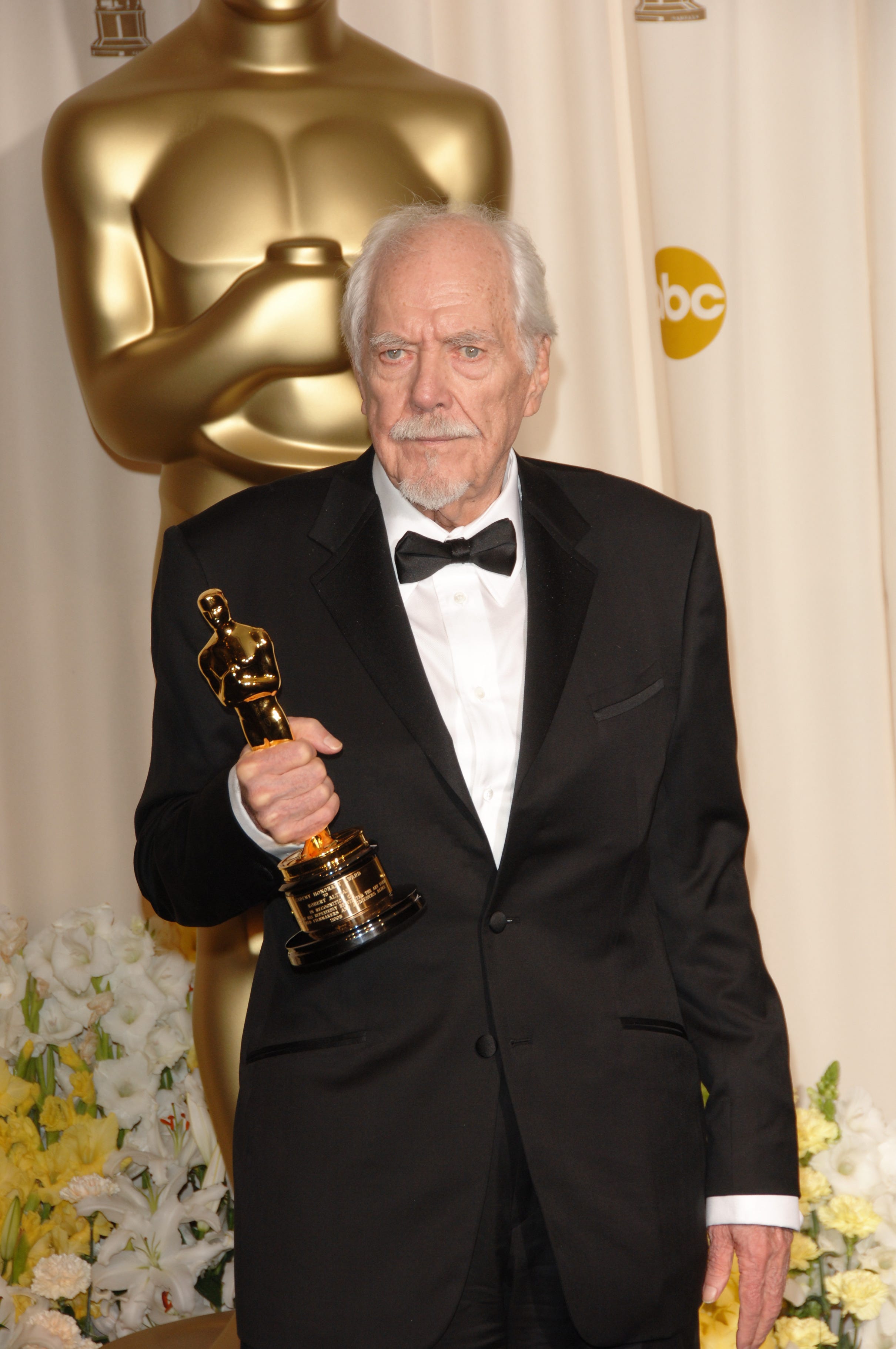
No other filmmaker has gotten a better shake than I have. I’m very fortunate in my career. I’ve never had to direct a film I didn’t choose or develop. I love filmmaking. It has given me an entree to the world and to the human condition and for that I’m forever grateful.
Robert Altman, 2006 Honorary Oscar acceptance speech
The series:
Introduction, Countdown, and That Cold Day in the Park
McCabe & Mrs. Miller and Images
The Long Goodbye and California Split
Nashville and Buffalo Bill and the Indians, or Sitting Bull’s History Lesson
Come Back to the Five and Dime, Jimmy Dean, Jimmy Dean and Streamers
Secret Honor and Fool for Love
The Gingerbread Man and Dr. T & the Women
Movies, Now More Than Ever! three filmmakers on Robert Altman
A Conversation with Christina Kallas
At the 78th Oscars (March 5th, 2006), Robert Altman received an Honorary Award, “in recognition of a career that has repeatedly reinvented the art form and inspired filmmakers and audiences alike.” In his acceptance speech, Altman thanked the cast and crew of all his films, his family, and his doctor, and ended by recognizing his heart donor.
I got the heart of, I think, a young woman who was about in her late thirties, and so by that kind of calculation, you may be giving me this award too early. Because I think I’ve got about forty years left on it. And I intend to use it.
Indeed. That same month, the 81 year-old Altman directed Arthur Miller’s Resurrection Blues at London’s Old Vic. Five days after Oscar Night, A Prairie Home Companion (2006) opened Austin’s South by Southwest Film Festival; it became a critical and commercial success in its summer wide release, grossing $26 million on a $10 million budget.
Seemingly powered by a much younger person’s heart, Altman began work on his next film. To quote an October 2006 Hollywood Reporter article,
Altman and writer Stephen Harrigan are developing a script inspired by the events depicted in S.R. Bindler’s 1997 documentary “Hands on a Hard Body: The Documentary,” which recounted a Texas endurance contest that offered a new Nissan Hardbody truck as the prize.
The last person left standing with a hand on the truck got to take it home. Altman has wanted to direct the project for years and now says it will be his next film.
But Altman died on November 20th of leukemia complications. He received a wave of tributes from colleagues, other filmmakers, and critics. On February 20th, 2007, which would have been Altman’s 82nd birthday, a Hollywood who’s who assembled at the Majestic Theater on Broadway to celebrate his life.
Perhaps the most meaningful tribute came from protégé Paul Thomas Anderson, who dedicated There Will Be Blood (2007) to Altman’s memory. He described Altman as an inspiration in a press conference for the film:
I saw his film(s) when I was starting out, and McCabe and Mrs. Miller was certainly one them, Nashville, everything. All of them. We became pretty close in the last few years of his life. I got the job of sitting next to him on A Prairie Home Companion, for insurance reasons. My partner [Maya Rudolph] was in the film, and she was pregnant at the time. Just in case anything happened with Bob I was hired to sit there next to him. I can’t tell you what I took from it.
Obviously it was a privilege and an honor and all that, but just such an amazing good time. For 30 days, to sit next to him. Bob was very good at relaxing; he was a very relaxed director. I don’t know if he always was like that. I think he might have been. I would find myself getting uptight about things, and he just sort of looked at me like “What are you worried about? It’s all going to be fine.”
So we come to the end of this series, which grew from a very modest idea — writing a few Altman-related posts to tie in with a Criterion Channel retrospective — into my second-longest Substack project. At the beginning, I thought I might write one post per decade, but as I dove into Altman’s filmography I discovered that there was just so much to talk about. (A special thanks to Dan Mirvish, Jared Sprouse, Holly Jones and Christina Kallas for their contributions to this series.)
Once, as a 19-or so year-old, I listened to the entire Beatles discography in chronological order. The music itself was and is wonderful and joyous and creative, but I also enjoyed experiencing the bigger narrative of the band’s career: the story of their rapid artistic development, their growth from “She Loves You” to “A Day in the Life” in less than four years.
This was a somewhat similar experience but with a longer, rougher trajectory, a rollercoaster ride of flops and comebacks. One full of really interesting films: classics, hidden gems, missed opportunities, fascinating failures and at least one straight-up terrible film. Robert Altman was inarguably an inconsistent filmmaker who didn’t always choose the best material, but it’s a testament to him that so much of his filmography is worth seeing.
Before we get to the inevitable top ten list, I’d like to take a moment to consider Altman’s career as a whole. First, I think it says something that feature filmmaking is only a subset of Altman’s body of work, which also included episodic television, cable miniseries, live theater and opera. He just loved working, creating, collaborating.
Altman’s long career also intersects with some of the big themes of postwar American film history.
Alongside John Frankenheimer, William Friedkin, Sidney Lumet, Arthur Penn and Franklin J. Schaffner, he was part of a proto-New Hollywood generation of American filmmakers who honed their craft as television directors. With M*A*S*H (1970), he became a leading figure of the New Hollywood era, a filmmaker willing to push boundaries, to knock American icons off their pedestals. With his flops at Fox and especially Popeye (1980), he had a hand in the end of that era. His early 90s comeback saw Altman attain a new status as something of an elder statesman for the American independent film boom and, at the end of his career, he was one of the very first mainstream American filmmakers to experiment with the possibilities of digital cinema.
Altman crossed paths with a motley parade of actors, producers, musicians, executives and others, from Shelley Duvall and Robin Williams in their film debuts to Robert Evans, Harry Nilsson, Van Dyke Parks, John Williams, Leonard Cohen, the Joffrey Ballet, Jules Feiffer, Vilmos Zisgmond, Harry Belafonte, Jerry Weintraub, Chris Blackwell, Warren Beatty, Julie Christie, Paul Newman, Meryl Streep, Lindsay Lohan and so many others.
And he put together a body of work that influenced multiple generations of filmmakers and other creatives, as seen in my conversations with contemporary filmmakers about his work.


In all my years on Substack, I’ve never done a top ten list. But now seems like the right time. As for honorable mentions, I’d put A Prairie Home Companion (2006), Brewster McCloud (1970) – such an odd little film – and California Split (1974) and then perhaps Images (1972) in the next tier. Beyond Therapy (1987) is by far the worst film I watched for this retrospective.
Here’s my top ten essential Robert Altman films in chronological order.
M*A*S*H: One of the biggest New Hollywood hits, a groundbreaking, boundary-pushing antiwar satire that represents the moment when a 45 year-old journeyman television and film director named Robert Altman became the cinematic auteur Robert Altman.
McCabe & Mrs. Miller: Warren Beatty and an Oscar-nominated Julie Christie in a wintry anti-western with one of the most complex, alive, well-realized settings you’ll see in any film.
The Long Goodbye: Raymond Chandler’s Philip Marlowe reinvented for the 1970s, with Elliot Gould as a slacker detective, Sterling Hayden commanding the screen as a tragic supporting character, and cinematographer Vilmos Zsigmond capturing pastel California sunlight.
Nashville: One of the great American films, Altman at his most Altmanesque, an epic panorama of life, death, politics, human connection and country music.
3 Women: Shelley Duvall and Sissy Spacek in a strange, beautiful film that was based on a dream and is one of the most dreamlike of cinematic experiences.
Secret Honor: Philip Baker Hall as Richard Nixon in a one-man show; a film that manages to turn one man monologuing in a room into compelling cinema.
Vincent & Theo: My pick for the most underrated film in Altman’s filmography; a hidden gem and a moving telling of one of art history’s great, sad stories.
The Player: The big 90s comeback, an endlessly entertaining, endlessly rewatchable Hollywood satire; Tim Robbins’s conniving Hollywood executive Griffin Mill is a standout character in Altman’s filmography.
Short Cuts: Altman adapting Raymond Carver’s short stories into another epic ensemble piece that served as a template for Magnolia (1998).
Gosford Park: An Agatha Christie-style murder mystery, a satirical look at the English class system and, above all, an Altmanesque exploration of a stately home’s daily operation.
If you search Altman on Google, the top stories won’t be about the filmmaker Robert but about the OpenAI CEO Sam. You’ll see news updates about the Musk v. Altman trial and think pieces about AI and its impacts.
Why watch Robert Altman movies in 2026? Because they’re the complete opposite of AI-generated content. Because they’re complex, chaotic, imperfect, spontaneous, improvised, noisy, cluttered and, in general, deeply, deeply human.
Such an honor to have been part of your deep dive into Altman‘s filmmaking, Robert. I hope it turns into a book!